
Why Research Proposals Matter, Even in High School
For parents and school counselors, the term “research proposal” may sound advanced for a high school student. However, when structured appropriately, proposal writing is one of the most educational and impactful academic exercises a student can undertake.
A well-prepared research proposal:
- Teaches critical thinking and planning
- Demonstrates academic maturity
- Prepares students for university-level research
- Strengthens applications to top universities
Importantly, universities value the ability to think like a researcher, not the complexity of the topic.
What a High School Research Proposal Is (and Is Not)
A high school research proposal is not:
- A grant application
- A fully developed thesis
- A promise of groundbreaking results
Instead, it is:
- A clear plan for a feasible academic investigation
- A demonstration of curiosity and structure
- Evidence that the student understands how research works
Setting this distinction helps parents and counselors manage expectations and reduce unnecessary pressure.

Core Elements of a Strong High School Research Proposal
A solid proposal typically includes five essential sections.
1. Research Question or Problem Statement
The proposal should begin with a focused and realistic research question.
Good questions are:
- Specific rather than broad
- Appropriate to the student’s academic level
- Aligned with the student’s interests and intended major
Example:
How does urban air pollution affect asthma-related hospital admissions in major U.S. cities?
2. Background & Brief Literature Review
This section shows that the student:
- Understands the topic context
- Has reviewed existing studies
- Can summarize academic sources clearly
For high school students, this is typically concise and selective, not exhaustive.
3. Research Methodology
This is the most important—and most misunderstood—section.
A strong methodology explains:
- What data or sources will be used
- How the research will be conducted
- Why the chosen approach is appropriate
Common high school–appropriate methods include:
- Data analysis
- Systematic literature review
- Surveys (with ethical guidance)
- Computational or AI-based approaches
4. Expected Outcomes & Limitations
Students should clearly state:
- What they expect to learn (not prove)
- Potential limitations of the study
Admissions officers and educators value intellectual honesty far more than overconfidence.
5. Timeline & Feasibility
A realistic timeline demonstrates:
- Planning skills
- Time management
- Awareness of academic workload
This section reassures parents and counselors that the project is manageable and well-scoped.
Common Mistakes Parents and Counselors Should Watch For
- Topics that are too broad or ambitious
- Overly technical language the student cannot explain
- Copying proposal templates without understanding
- Lack of ethical or mentor oversight
These issues often lead to frustration and weaken the educational value of the project.
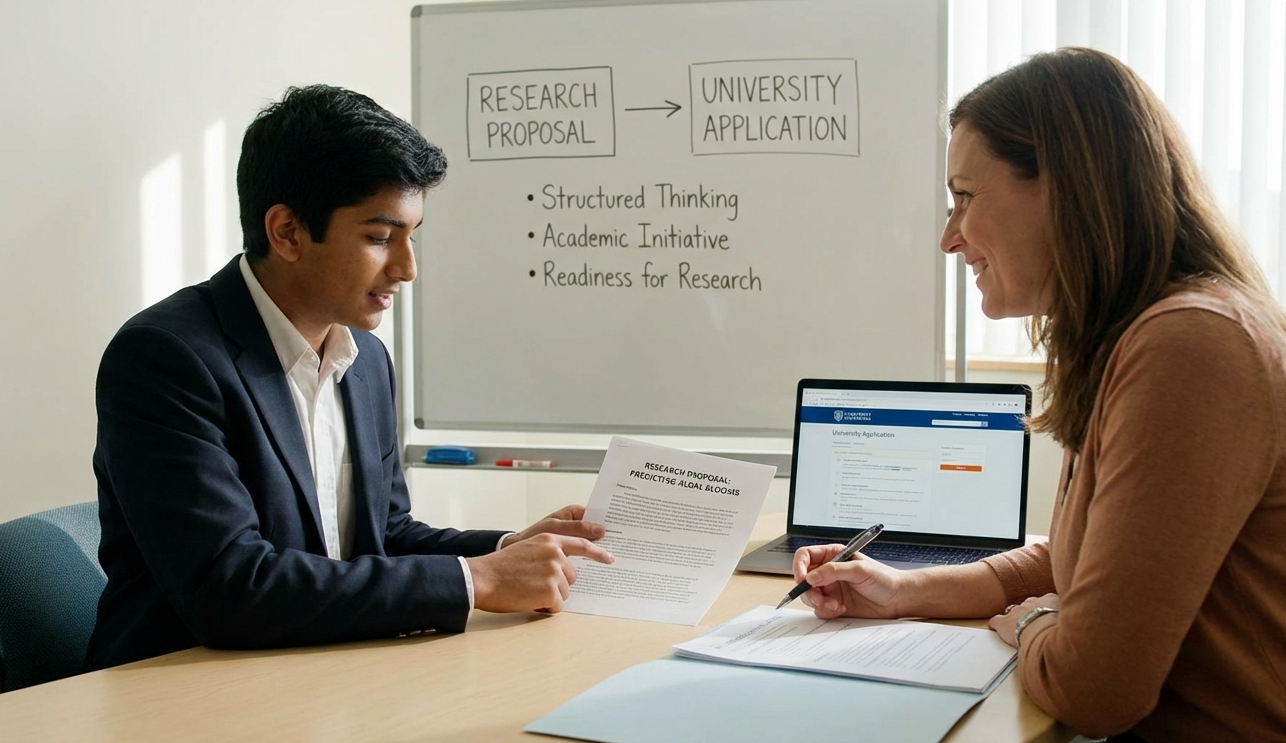
How Research Proposals Support University Applications
From an admissions perspective, a research proposal shows:
- Structured thinking
- Academic initiative
- Readiness for research-based learning
- Alignment between interests and academic goals
Even when a project does not lead to publication, a strong proposal can become:
- A foundation for future research
- A compelling essay topic
- Evidence of intellectual growth
How Ignite Achievers Guides Proposal Development
At Ignite Achievers, we help students:
- Develop realistic research questions
- Learn academic proposal structure
- Write clearly and ethically
- Receive mentor feedback and revisions
- Align proposals with long-term academic goals
Parents and counselors are kept informed throughout the process to ensure transparency and balance.
Final Thoughts for Parents and Counselors
A research proposal is not about perfection—it is about learning how to think, plan, and question.
When guided correctly, proposal writing becomes:
- A low-risk, high-impact academic experience
- A bridge to future research and innovation
- A strong signal of academic readiness
Want to support students in building strong research foundations?
Learn more at https://igniteachievers.org/