
As both a father and a professor, I often reflect on what truly prepares young people for college. Each summer brings a familiar question for many families: how should students make the most of this time? The answers often come wrapped in urgency. Do something impressive. Stay competitive. Add another line to the application.
That pressure is understandable. It is also part of a broader conversation about education today. Books like Hacking College: Why the Major Doesn’t Matter—and What Really Does argue, persuasively in many ways, that what matters most in education is not the label attached to a credential but the experiences and habits of mind students develop. There is a great deal of truth in that perspective.
At the same time, as someone who has spent decades teaching and mentoring students, I think it is worth slowing the conversation down a bit.
One assumption that often sits quietly beneath discussions of efficiency and optimization is that learning moves in a straight line. If we remove the inefficiencies, the thinking goes, we can compress the process. But real learning rarely works that way.
Students return to ideas again and again. They misunderstand, revisit, and slowly refine their understanding. What looks like repetition is often growth. The learner is not the same person on the second or third encounter as they were on the first.
This is especially true for intellectually demanding work. Understanding takes time, not because the system is slow, but because the learner is changing.
It is true that schools and colleges contain inefficiencies. Anyone who has spent time in classrooms knows this. But it does not follow that learning itself should be rushed.
When time is stripped away too aggressively, what often disappears are the very elements that make understanding durable. Reflection. Struggle. Revision. The ability to sit with a question before moving on.
The right response to inefficiency is not simply doing less, but doing fewer things more thoughtfully.
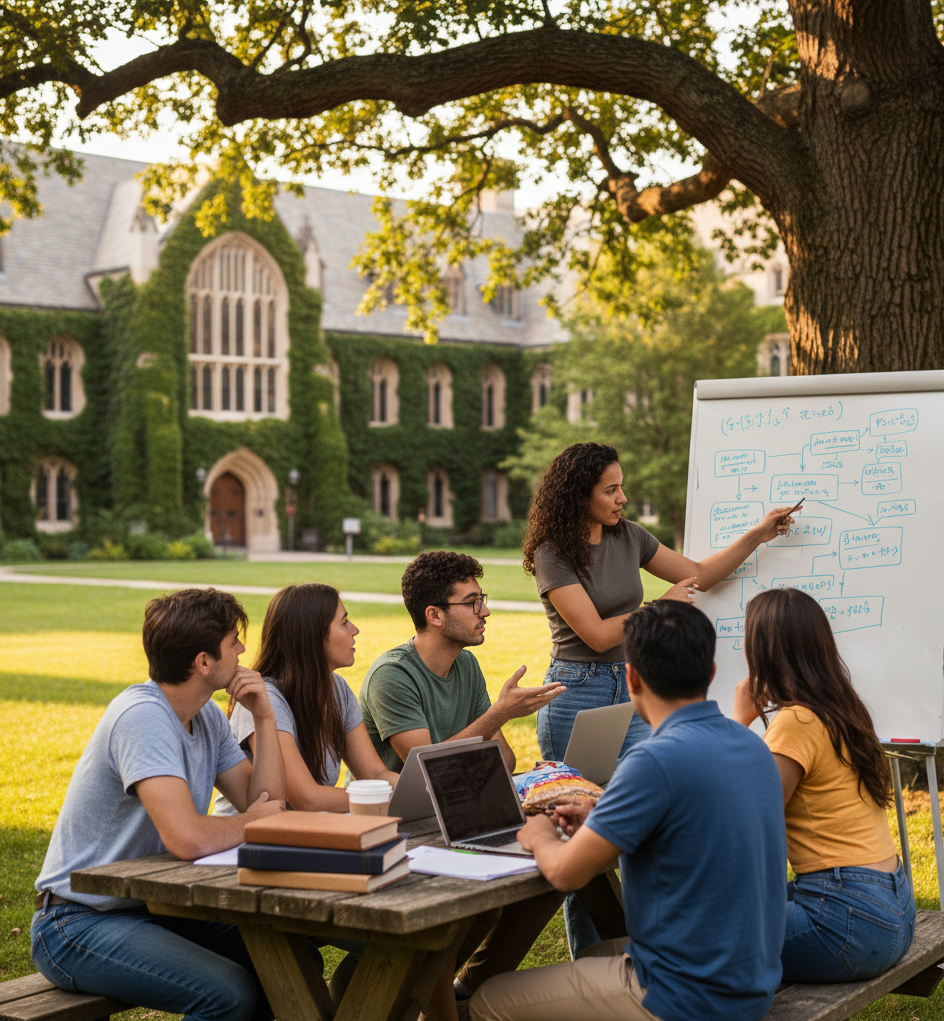
When students engage in research or similarly challenging work, the value lies not in the title of the activity but in how it asks them to think. To pose questions, to grapple with uncertainty, and to revise their ideas when the first attempt falls short.
I have seen this consistently in programs like Ignite Achievers and in my own classrooms. The students who grow the most are not the ones who move fastest, but the ones who stay with a problem long enough for it to change how they see it.
From the college side, the distinction is usually clear. Admissions readers and faculty can tell when a student has simply accumulated experiences and when a student has been shaped by a single meaningful intellectual challenge.
Depth shows in how students write, how they reflect, and how honestly they can talk about difficulty. A single sustained experience often says more than a long list of polished activities.
A meaningful summer does not need to be packed. It needs to be intentional. It should give students the chance to slow down, think deeply, and experience what real intellectual effort feels like.
As a parent, that is what I want for my own children. As a professor, I hope students bring this with them when they arrive at college. The ability to engage seriously with ideas, persist through uncertainty, and value understanding over appearances.
Those qualities cannot be checked off a list. They develop over time through experiences that invite depth rather than speed.
That perspective shapes how we think about learning, research, and summer opportunities. Not as items to collect, but as moments that, when taken seriously,